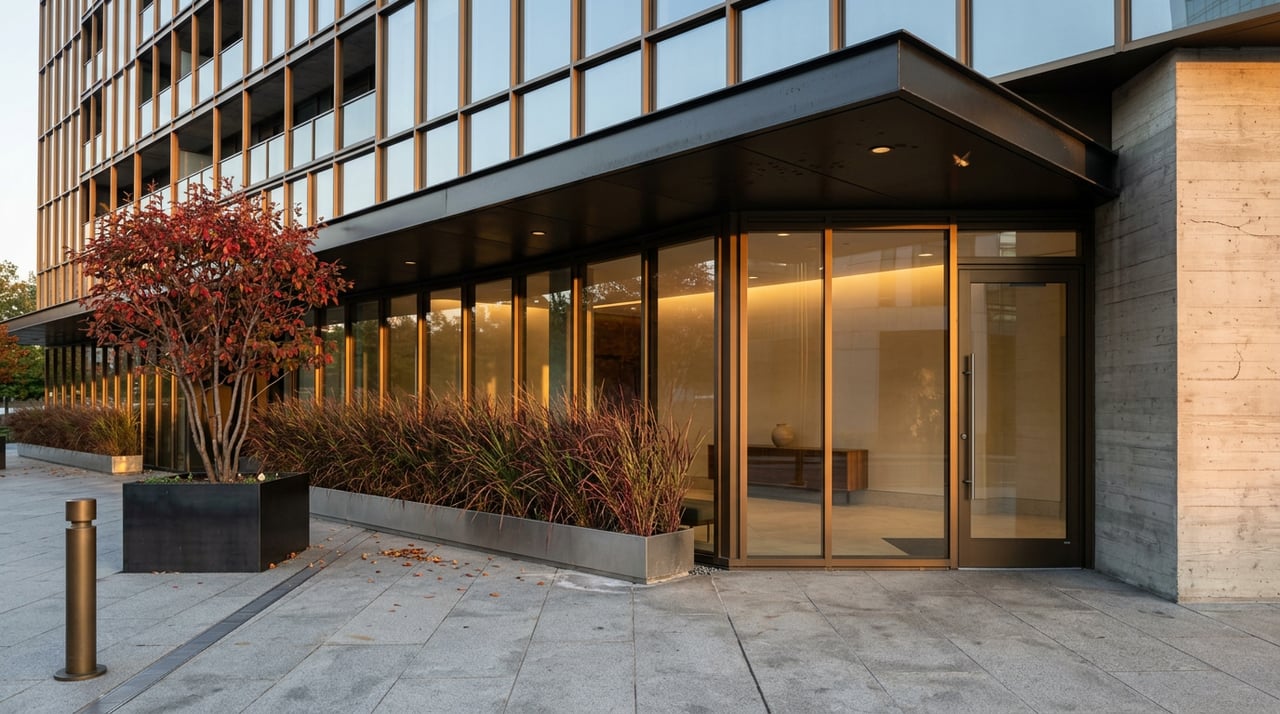
For most of the past decade, the biggest building in the Seaport was also the quietest. Commonwealth Pier sat behind construction fencing so long that plenty of people who moved to the neighborhood in the last five years never saw it operating as anything but a job site. It opened in 1913 as a wool-trade hub and immigration port, spent decades as a convention center, and then, starting around 2020, became a decade-long renovation that outlasted three different completion dates.
This month, according to a WCVB report picked up by Boston radio outlets, Pembroke Real Estate finished the job. And the thing that opened is not simply "a building." It is the reason the Seaport's daily rhythm is about to reorganize itself around two ends of the same waterfront instead of one diffuse middle.
What Ten Years of Construction Actually Bought
If you have watched the scaffolding come and go without much reason to care, here is what actually changed. Commonwealth Pier now has a public plaza facing the harbor, an expanded Harbor Walk with new lighting, seating, and public art, and direct pedestrian connectivity that the old convention-center layout never offered. A new Harbor Loop ferry is set to connect the Pier to Lovejoy Wharf and Logan Airport, which will matter the day you need to get to a flight from the Seaport without a car. The Museum of American Finance has already opened on site. The Institute of Contemporary Art is beginning a programming partnership there. Outdoor fire pits are planned to keep the plaza usable once the harbor wind turns cold. This summer, Commonwealth Pier hosted tall ships from around the world during Sail Boston 2026, the first time in years the pier has been a genuine public destination rather than a Fidelity office annex with a nice facade.
That is a different kind of opening than "new restaurant on the ground floor." It is infrastructure a resident actually uses: a ferry stop, a museum, a plaza that survives past Labor Day, a Harbor Walk that finally goes somewhere.
The Restaurant Wave Is Landing at One Address
The food news backs this up. Danny Meyer's Union Square Hospitality Group opened a Daily Provisions location on the pier, an all-day cafe with breakfast sandwiches and coffee, alongside Ci Siamo, an Italian restaurant whose New York sibling drew a nod from the New York Times. Salt & Straw picked Commonwealth Pier for its first Boston scoop shop, launching July 24 with a Boston Cream Pie flavor made for the occasion, right next to LifeAlive Organic Cafe. These are not scattered openings around the neighborhood's edges. They are clustered on one property, timed to the pier's own reopening.
That clustering is the detail worth sitting with. For years, new Seaport restaurants opened wherever a landlord had space: Seaport Boulevard, Northern Avenue, the district's back streets. This year, four notable openings all chose the same address at nearly the same moment. That is not a coincidence of timing. It is a signal that Commonwealth Pier is functioning as the neighborhood's actual center for the first time since it stopped being a working pier.
A Second Front Door Is Opening a Few Blocks South
Here is what most coverage of the Seaport's restaurant boom misses: a second cluster is forming at Fan Pier, and it is not the same kind of cluster.
The team behind Grill 23, Bistro du Midi, The Banks, and Harvest, Himmel Hospitality Group, announced plans for two new restaurants at Fan Pier: Le Boulevard, a 250-seat French bistro with a large patio at 10 Fan Pier Boulevard, and Bar 23, a 75-seat spinoff of the Back Bay steakhouse at 11 Fan Pier Boulevard. Both are set for spring 2027. Chef-partner Robert Sisca, describing the menu, put it simply:
"We'll have the steak trinity: Kobe, 100-day ribeye, and dry-aged sirloin."
Grill 23 has operated in Back Bay since 1983. That is a 43-year run in a city that does not forgive mediocre steakhouses, and it is the kind of local track record that stands in contrast to the other big steakhouse names arriving in the same stretch of waterfront. Chicago's Maple & Ash opened at 131 Seaport Boulevard on April 30, bringing wood-fired seafood towers and, as Boston Magazine's restaurant desk described it, a touch of "vampire aesthetic" to a neighborhood that already has more out-of-town steakhouse chains than it knows what to do with. London's Hawksmoor is set to land in Fort Point later this year with its own Sunday roast tradition. Boston Magazine put the pattern plainly, noting the Seaport is now "smack-dab in the middle of out-of-town-steakhouse-chain territory."
So the split is not just geographic, Commonwealth Pier versus Fan Pier. It is also a split in who is betting on the neighborhood. The Pier's 2026 wave is largely national hospitality groups making their first Boston move. The Fan Pier wave arriving in 2027 is a Boston kitchen team extending a four-decade run three blocks from where it started.
Not Everyone Is Staying for the Party
The Seaport's food scene is not purely additive. Chickadee, the restaurant that opened at the edge of the Seaport near the Innovation and Design Building eight years ago, announced its closing this summer. Owners Ted Kilpatrick and John daSilva posted a farewell that read in part:
"You made this restaurant so much more than a place to eat."
Eight years is a long tenure for any independent restaurant in a neighborhood built mostly in the last fifteen. Its closing does not undercut the Pier's momentum, but it is a reminder that a wave of national openings and one closed local original can happen in the same season, and that a neighborhood's food identity is never only additive.
Also already open nearby: Bambola and the Girl Next Door, a side-by-side Italian restaurant and cocktail bar from Sneaky Good Hospitality at 225 Northern Avenue, in the former Seaport Social space at the corner of Northern Avenue and Harborview Lane. It debuted April 3 with a design built around a curved, high-gloss red-tiled entrance, the kind of statement space that suggests the neighborhood's newer operators are betting on spectacle as much as menu.
What This Actually Changes for a Seaport Saturday
If you already live here, the practical shift is this. For most of the last decade, "going to the Seaport waterfront" meant picking a direction and hoping something was open. Now there are two real anchors. Commonwealth Pier gives you the museum, the ICA programming, the plaza, this year's restaurant cluster, and a ferry connection on the way, all reachable on foot from most of the neighborhood's residential buildings. Fan Pier, starting in 2027, will give you a French bistro with a real patio and a steakhouse from a kitchen with more than four decades of Boston credibility behind it.
The Harbor Loop ferry is worth watching for even if you are not headed to Logan. Once it starts running, it will connect Commonwealth Pier to Lovejoy Wharf, putting the North End and the TD Garden area within a boat ride instead of a rideshare. That will be a genuinely new option for a neighborhood that has spent years being harder to leave by water than to leave by land.
None of this requires a real estate decision. It requires knowing where to walk this weekend, and for the first time in a while, the Seaport has two good answers instead of a construction fence and a guess.
If you are weighing what a specific Seaport address is worth once you factor in proximity to either pier, or you are trying to figure out how neighborhood momentum like this shows up in resale value, that is a conversation worth having directly. Michael Egan works Boston's waterfront and core neighborhoods daily and can walk you through what's actually driving demand block by block. Let's connect.