Looking for a Boston neighborhood that feels polished, walkable, and deeply tied to the city’s history? Back Bay often stands out because it brings together elegant residential streets, landmark public spaces, and everyday convenience in one compact area. If you are trying to picture what life here actually feels like beyond the postcards, this guide will walk you through the daily rhythm, housing character, amenities, and transit that shape everyday living in Back Bay. Let’s dive in.
Back Bay’s Everyday Feel
Back Bay has a distinct sense of order that sets it apart from many other Boston neighborhoods. The area was created from filled tidal marshes in the mid-1800s, and that planned origin still shows up today in its street grid and formal layout.
In practice, daily life here tends to balance calm and activity. Residential streets like Beacon Street, Marlborough Street, and Commonwealth Avenue feel quieter, while Newbury Street, Boylston Street, St. James Street, and Huntington Avenue carry much of the neighborhood’s shopping, dining, hotel, office, and street-level energy.
That split is a big part of Back Bay’s appeal. You can step out for coffee, errands, dinner, or a walk, then return to blocks that feel more settled and residential.
Historic Character Shapes the Neighborhood
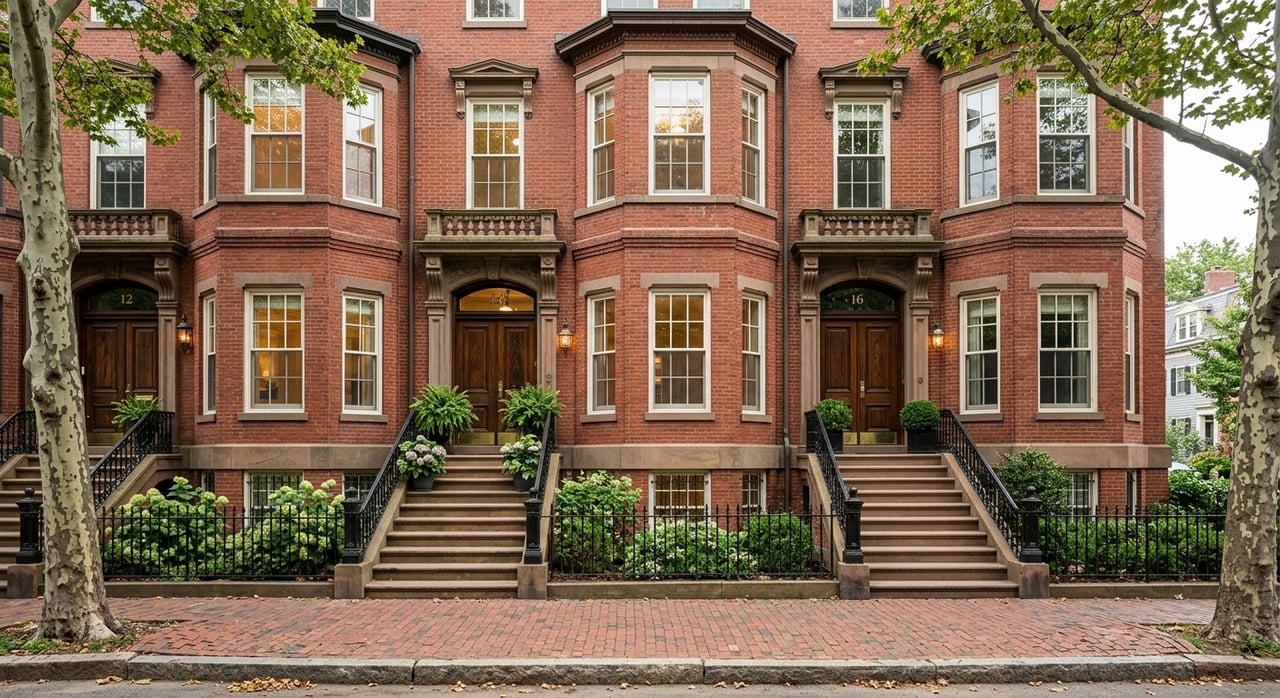
If you are drawn to architecture, Back Bay makes a strong impression. The neighborhood is known for Victorian row houses, brick sidewalks, and preserved masonry façades that give many blocks a consistent visual rhythm.
The architecture developed through the late 19th and early 20th centuries, and some former row houses were later adapted to commercial use, especially along streets like Newbury. That mix helps explain why the area feels both historic and active rather than frozen in time.
The neighborhood is also a formally designated historic district. For homeowners, that matters because exterior work is reviewed by the Back Bay Architectural District Commission, which means renovations and façade changes are approached with preservation in mind.
What Historic-District Rules Mean for You
If you are considering buying in Back Bay, it helps to understand that the neighborhood’s appearance is protected by design. Brownstone, brick, and other masonry details are part of what gives the area its identity, and changes to exteriors are not handled as casually as they might be in a newer part of the city.
For some buyers, that is a major advantage. It helps preserve the architectural consistency that makes Back Bay so recognizable block to block.
For others, it is simply something to plan for. If you are thinking about updates to a façade or other exterior elements, the review process is an important part of ownership here.
Parks and Public Spaces Matter Here
Back Bay is not just about buildings and shopping corridors. Green space plays a real role in daily life, and that is one reason the neighborhood can feel livable even in the center of the city.
Commonwealth Avenue Mall serves as a central spine through Back Bay and is also part of the Emerald Necklace. Along with the Esplanade and the Hatch Shell area, it supports everyday recreation as well as concerts, festivals, and seasonal city activity.
That means your routine can include more than a commute or a restaurant reservation. A walk along the Mall, time by the river, or an event nearby can all fit naturally into the week.
Copley Square Adds Everyday Utility
Copley Square is one of Back Bay’s best-known landmarks, but it also functions as useful neighborhood space. After renovation, Copley Square Park is once again open for farmers’ markets, walking, and regular public use.
That makes it more than a place you pass through on the way somewhere else. It is part of the neighborhood’s day-to-day rhythm and gives residents another public space to enjoy close to home.
Errands Are Close at Hand
One of Back Bay’s biggest lifestyle advantages is how much is concentrated into a relatively small area. Newbury Street alone is a mile-long, eight-block stretch filled with shops, salons, galleries, and restaurants.
That density can make daily life feel efficient. Whether you are heading out for coffee, personal services, a casual lunch, or an evening plan, many options are within a short walk.
The Central Library in Copley Square adds another practical benefit. It offers free indoor space, Wi-Fi, cafés, community areas, and the city’s main Back Bay library branch at 700 Boylston Street.
Why Walkability Feels Different Here
Back Bay’s walkability is not just about having sidewalks. It is about having a real mix of services, public spaces, and transit within easy reach, which can reduce how much planning everyday life requires.
In many neighborhoods, errands, recreation, and commuting pull you in different directions. In Back Bay, those parts of your routine often sit close together.
Transit Is a Major Strength
For many buyers and renters, transit access is one of Back Bay’s most practical advantages. Back Bay Station provides access to the Orange Line, Commuter Rail, and Amtrak, while Arlington, Copley, and Hynes offer nearby Green Line access.
That level of connectivity supports a lifestyle that can be less car-dependent, especially if you commute downtown or travel across the city regularly. It also gives you flexibility if your work or social life takes you beyond one part of Boston.
The neighborhood’s layout also supports walking and biking connections. The Commonwealth Avenue Mall and nearby park-and-river network help connect daily movement with public space rather than just traffic corridors.
Back Bay During Major City Moments
Back Bay can feel especially lively during major Boston events. Boston planning highlights the Boston Marathon finish line as a defining feature, which helps explain why spring in the neighborhood can bring a different kind of energy.
For some residents, that atmosphere is part of the appeal. For others, it is simply helpful to know that certain times of year bring larger crowds and more visible city activity.
Either way, it is part of what makes Back Bay feel connected to the wider life of Boston. You are not living at the edge of the action here. You are very much in it.
Who Back Bay Often Appeals To
Back Bay tends to attract people who want an urban lifestyle with strong architectural character and easy access to central Boston. The city’s 2025 planning profile describes the neighborhood as relatively young and highly educated, with 48.7% of residents between ages 18 and 34 and 88.1% of residents age 25 and older holding a bachelor’s degree or higher.
That data helps explain the neighborhood’s polished, professional feel. While every resident has a different reason for choosing Back Bay, many are looking for a setting where housing character, convenience, and city access all work together.
If that sounds like your lifestyle priorities, Back Bay often earns a closer look. It offers a rare mix of historic streetscape, public amenities, and transit access in one of Boston’s most established neighborhoods.
The Bottom Line on Living in Back Bay
Everyday living in Back Bay is shaped by proximity. Historic row houses, destination shopping streets, major public spaces, and strong transit access all sit close together, which can make the neighborhood feel both refined and practical.
If you are searching in Boston, Back Bay is worth understanding as more than a luxury address or a well-known shopping district. It is a preservation-minded urban neighborhood where daily errands, commuting, and leisure can all fit into the same few blocks.
If you are thinking about buying or selling in Back Bay or another Boston neighborhood, Michael Egan offers thoughtful, neighborhood-focused guidance tailored to the way you want to live.
FAQs
What is everyday life like in Back Bay, Boston?
- Back Bay offers a mix of quiet residential blocks and active commercial streets, with parks, shopping, dining, and transit all close together.
What type of homes are common in Back Bay?
- Back Bay is best known for historic Victorian row houses, brick sidewalks, and preserved masonry façades rather than detached suburban-style homes.
Is Back Bay a historic district?
- Yes. Back Bay is a designated historic district, and certain exterior changes are reviewed by the Back Bay Architectural District Commission.
What parks and outdoor spaces are in Back Bay?
- Key public spaces include Commonwealth Avenue Mall, Copley Square Park, the Esplanade, and the Hatch Shell area.
How convenient is transit in Back Bay, Boston?
- Back Bay has strong transit access through Back Bay Station and nearby Green Line stations at Arlington, Copley, and Hynes.
What makes Back Bay appealing to Boston buyers?
- Many buyers are drawn to Back Bay for its historic architecture, walkability, dense amenities, central location, and strong transit connections.